

Yellow Journalism and Manufacturing Consent for Wars

Looking back at the history of war, a recurring pattern emerges: the motivation for conflict often precedes its public justification. These narratives are then repeated through political speeches, media coverage, academic commentary, and cultural discourse until they appear logical, urgent, and unquestionable.
Yellow journalism, a style of reporting that emphasizes sensationalism, exaggeration, and emotional appeals over factual reporting to boost circulation, plays an important in setting the narrative.
Over time, the justification becomes part of public memory, with little or no reference to the original motivation. Meanwhile, the consequences of war remain embedded in institutions, economies, and the lives of ordinary people for generations.
Pretexts in History
This behavior is most commonly observed in imperial war practices. Many historical conflicts reveal how public justifications can differ from the underlying motivations.
The 2003 invasion of Iraq was justified largely on the claim that Saddam Hussein possessed weapons of mass destruction (WMD). Later investigations found no active WMD stockpiles, raising serious questions about the intelligence used to mobilize public support for war.
Similarly, the Gulf of Tonkin incident (1964) was presented as an unprovoked attack on U.S. naval forces, providing the basis for expanded U.S. involvement in Vietnam. Later evidence suggested that at least one of the alleged attacks likely did not occur as initially reported.
Earlier examples can be seen in the Opium Wars, where Britain framed its military actions against China as disputes over trade rights and diplomatic recognition. In reality, the conflict centered on protecting the lucrative opium trade, despite the devastating social effects of addiction within Chinese society.
A classic French example is the 1827 Fly Whisk Incident. After the Dey of Algiers struck the French consul Pierre Deval with a fly-whisk during a dispute over unpaid debts, France transformed the episode into a question of national honor and used it as a pretext for the invasion of Algeria, even though the deeper issue was tied to debt, prestige, and imperial expansion.
The expansion of the United States into Mexican territory, including Texas, is also frequently discussed by historians as an example where territorial ambitions predated the moral framing used to justify war.
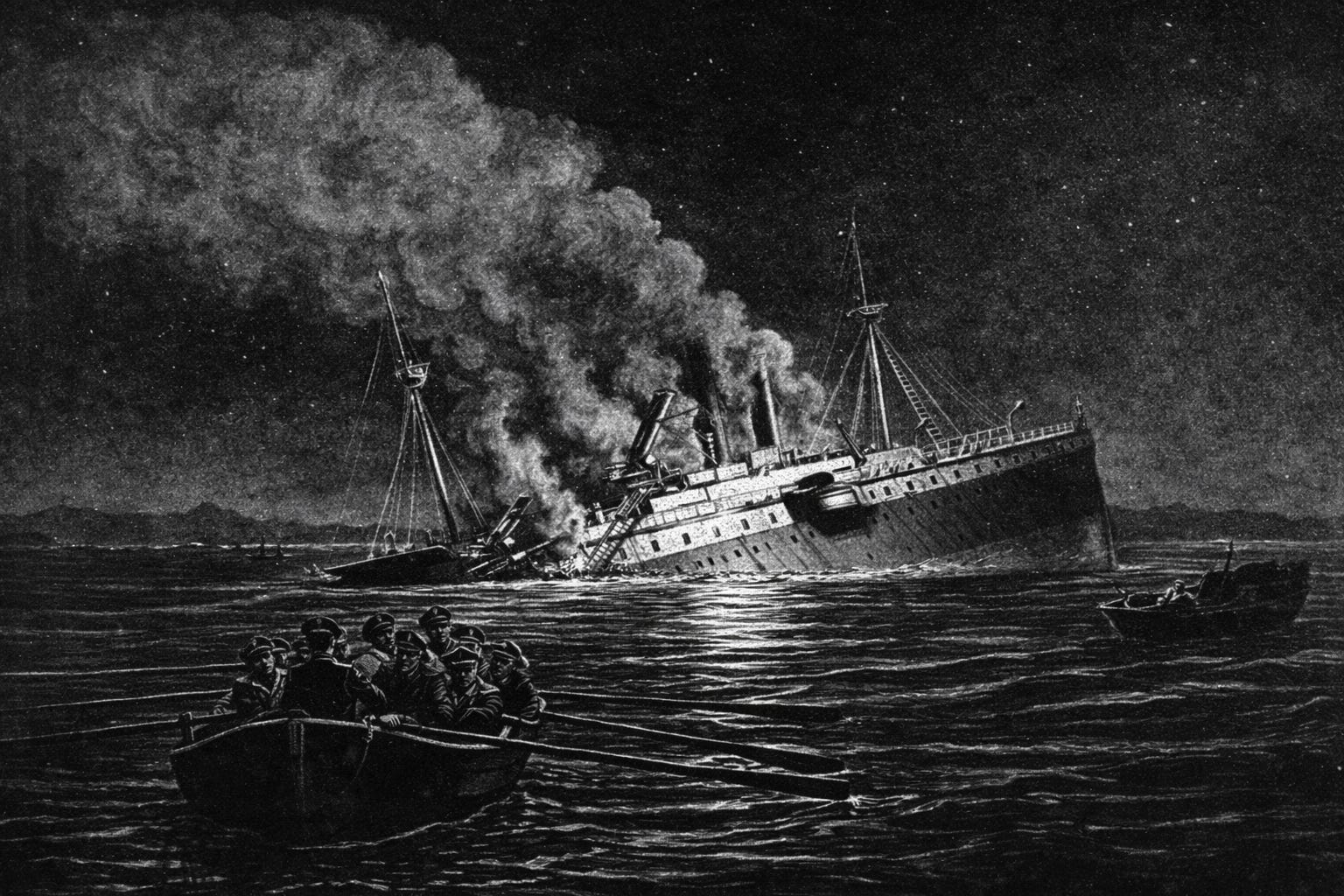
The Spanish-American War was publicly framed through moral outrage and sensational reporting after the explosion of the USS Maine, but it also aligned with broader American strategic and imperial ambitions. The explosion, blamed on Spanish treachery by the press, helped spark the Spanish-American War under the rallying cry, “Remember the Maine!” Later investigations suggested that the USS Maine likely exploded because of a spontaneous coal fire in a nearby bunker that triggered a magazine explosion.
These cases suggest a structural pattern: strategic interests often exist prior to public justification.
The Role of Intellectual and Media Institutions
An important dimension of this process is the role of civil society institutions in shaping public opinion.
Edward Said argued in his influential work Orientalism that intellectual frameworks can shape how societies perceive other civilizations. He showed how academic writing, literature, journalism, and political commentary often portrayed Eastern societies as irrational, backward, or dangerous. Such portrayals made military intervention appear not only acceptable but even necessary as a “civilizing mission.”
A related perspective is presented by Noam Chomsky and Edward S. Herman in Manufacturing Consent. They argue that modern media systems often operate within institutional constraints that shape which viewpoints are emphasized and which are marginalized.
Their “propaganda model” suggests that media coverage tends to align with dominant political and economic interests, not necessarily through conspiracy, but through structural incentives such as ownership patterns, advertising pressures, sourcing dependencies, and ideological assumptions.
As a result, narratives supporting military action may receive greater repetition and legitimacy than dissenting views, creating a perception of broad consensus even when significant disagreement exists.
Together, these perspectives highlight how military action is rarely justified solely through force; it is also justified through narrative.
Why Pretexts Work
Governments require public support to sustain war efforts. Citizens must be convinced that sacrifices in lives, resources, and stability are necessary.
Common themes used in justification include:
Protection of national security
Defense of moral values or human rights
Prevention of future threats
Stabilization of global order
Promotion of freedom or democracy
These claims may sometimes contain elements of truth. However, they often present simplified narratives that mask underlying geopolitical or economic considerations.
Once a society accepts the framing, reversing course becomes politically costly. Leaders risk appearing weak or inconsistent, while institutions adapt to the logic of ongoing conflict.
Generational Consequences
Wars rarely end when ceasefires are signed. Their effects persist through damaged institutions, lost human capital, and disrupted economic development.
Examples across history show common long-term consequences:
destruction of infrastructure and industry
long-term poverty traps
political instability
displacement of populations
weakened educational systems
intergenerational trauma
The Opium Wars contributed to a century of instability in China. The Vietnam War reshaped Southeast Asia’s political and economic landscape. The Iraq War continues to influence regional geopolitics decades later.
These outcomes demonstrate that short-term narratives can create long-term structural damage.
The Illusion of Justice in the Long Run
Many observers take comfort in the belief that history eventually corrects injustice. Over time, documents are declassified, memoirs are written, and academic research re-evaluates past decisions.
However, the economist John Maynard Keynes famously warned:
“In the long run we are all dead.”
Keynes was emphasizing that waiting for long-term equilibrium does not solve immediate suffering. For him, speaking from economics perspective, policies must be evaluated not only by eventual outcomes, but also by the human cost imposed in the present.
For societies affected by war, the “long run” may mean decades of lost development, weakened institutions, and reduced opportunities for future generations.
Children who grow up in conflict zones often face lower education levels, poorer health, and reduced lifetime earnings. By the time historical narratives acknowledge errors, irreversible damage may already have occurred.
Conclusion
Inventing moral justifications for strategic decisions is not a new phenomenon. It has appeared across empires, ideologies, and historical periods.
If societies wish to reduce cycles of conflict, they must cultivate the intellectual discipline to critically examine the narratives presented to them.
Waiting for justice in the “long run” is often insufficient, because the long run arrives only after generations have already paid the price.
Understanding how justifications are constructed is therefore not merely an academic exercise. It is an essential step toward more responsible decision-making in the present and lasting peace in the world.